
Digital India is a initiative by our Prime Minister Shri Narendra Modi to make India a digitally blossoming country. His vision is to help each individual grow digitally. It was launched on 1 July 2015.
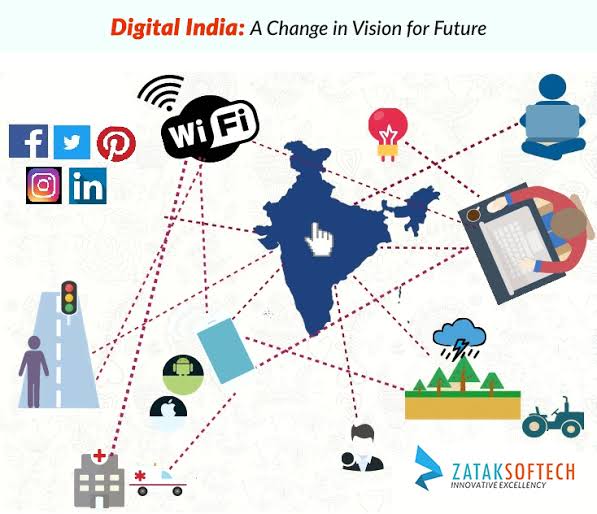
In a conference Shri Narendra Modi Ji said the following words laying great emphasis on Digital India:
- I dream of a digital India where 1.2 billion connected Indians drive innovation.
- I dream of a digital India where knowledge is strength and empowers people.
- I dream of a digital India where access to information knows no barriers.
- I dream of digital India where government proactively engages with citizens on social media.
- I dream of a digital India where government is open and governance is transparent.
- I dream of digital India where quality healthcare reaches right upto the remotest areas through e-health care.
- I dream of digital India where quality education reaches most inaccessible areas and is driven by digital learning.
- I dream of digital India where technology ensures that government and citizen interaction is incorruptible.
- I dream of digital India where farmers are empowered with real time information and connected to global markets.
- I dream of digital India where we have mobile enabled emergency services to personal security.
- I dream of digital India where cyber security becomes an integral part of national security.
- I dream of digital India where there is mobile and e-banking for financial inclusion.
- I dream of digital India where e-commerce drives entrepreneurship.
- I dream of digital India where the world looks to India for the next big idea.
- I dream of digital India where citizens are empowered citizens.
The programme has 3 visions primarily :
1. Digital Infrastructure as a Utility to Every Indian citizen.
2. Governance and Services on Demand.
3. Digital Empowerment of Citizens.
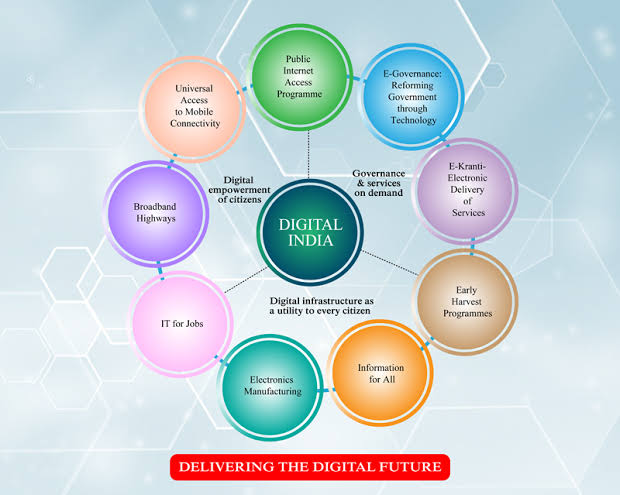
There are 9 pillars on which the project Digital India is based :
Digital India is an umbrella programme based on technology with a vision to transform India to a digitally empowered society and a knowledge economy.
- Broadband Highways.
- Universal Access to Phones.
- Public Internet Access Programme.
- E-Governance – Reforming government through Technology.
- eKranti – Electronic delivery of services.
- Information for All.
- Electronics Manufacturing – Target NET ZERO Imports.
- IT for Jobs.
- Early Harvest Programmes.
I am a list which will show some key initiatives of government of India –
1. Digi Locker
2. MyGov: A Platform for Citizen Engagement towards Good Governance in India
3. E-Sign
4. Swachh Bharat
5. National Scholarship Portal
6. E-Hospital
7. Digitize India Platform
8. E-Governance / E-Kranti
9. E-Aadhar
10. Skill Development
11. E-Filing
12. Online Labs
13. E-Waste
14. Tactile Graphic
15. Software Technology Parks Of India
16. Vidyut Pravah
17. Ujala
18. School Report Card | Know Your College
19. Jeevan Praman
20. Meri Sadak
Pradhan Mantri Kaushal Vikas Yojana ( PMKVY )
- Click Here To Watch: Video – 1 | Video – 2 | Click Here To Find Training Centre
21. Mahila E-Haat
22. Government E-Marketplace (GEM)
23. Bharatavani
24. SWAYAM
25. E-Pathshala
26. Saransh
27. Shaala Siddhi
28. Vidya Lakshmi Education Loan
29. Vidyanjali
30. Pharma Sahi Daam
31. POCSO E-Box
32. E-Pashuhaat
33. Prashikshak
34. E-Nam
35. Shaala Darpan
36. Cyber Swachhta Kendra
37. MyAgriGuru
38. Open Government Data (OGD)
All India Village Household Electrification Dashboard
39. MyMSME App
41. Bharat Ke Veer
42. Mahaswayam
43. INAM-Pro +
44. Epace
45. INFRACON
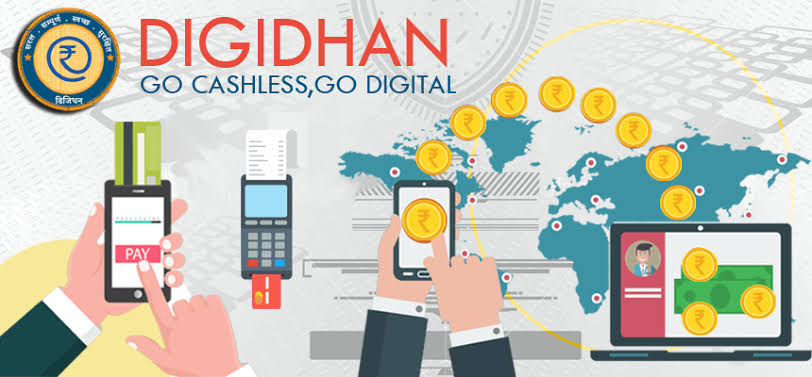
46. Cashless India
47. GST Portal
49. Umang
50. Three Years Of Modi Government
51. Janahitha
52. maadhaar App
53. Parivahan Sewa
54. Saarthi App
56. Aaykar Setu App
- Click Here To Watch The Video
57. G-Ride App
58. Merit App
59. E-Bidding Click Here To Visit The Website
60. E-Vin App
61. My Plants App
62. Mahaonline
NOC Online Application & Processing Systems (NOAPS)
63. Nakshe Survey Of India
64. UDAY (Ujwal Discom Assurance Yojana)
Visiting Advance Joint Research Faculty (VAJRA)
65. E-Rashtriya Kisan Agri Mandi (E-Rakam)
66. Net Zero Energy Buildings (NZEB)
“Must See” Indian Heritage
KROPS
E-Cinepramaan
PFMS
Bharatkosh
NARI
More
- PhD Scheme For Electronics And IT
- Electronics Manufacturing
- Rural ICT Project
- Core Banking Services In Indian Post Offices
- MTNL Tier 3 Data Center
- Installation Of Telecom Towers In Left Wing Extremist Areas
- Next Generation Network
- BSNL Wi Fi
- MTNL Roaming
- Digital India Newsletter
- National Centre Of Geo Informatics (NCoG)
- Text To Speech In 9 Indian Languages
- E-Payment Portal
- RFP For Empanelment Of Private Cloud Service Provider
- Digital Programmable Hearing Aid (Tarang)
- Special Manpower Development Program
- North East BPO Promotion Scheme (NEBPS)
- India BPO Promotion Scheme (IBPS)
- Launch of Products During Digital India Week
- Portal And Apps Launched In Digital India Week
- Communication Centres Launched In Digital India Week
- Cyber Village in Sikkim
- Karnataka’s “MobileOne” e-Governance service
The long term advantages of Digital India Project may be discussed under the following headings:
- Connectivity
- E-governance and service delivery
- E-commerce/E-business
- Education
Connectivity
Less than 20% of people in India use the Internet (compared to more than 85% in America and 48% in China) despite India being a global leader in Information Technology. This digital divide is mainly due to the lack of Internet penetration into the rural interiors of the country where two-thirds of the total population of the country resides.
The National Optical Fibre Network project, initiated in 2011, envisaged providing high speed broadband connectivity to 2,00,000 Gram Panchayats by 2013. But, as it generally happens in India, the project got off to a very slow start and missed its deadline by light years.
The Digital India project has revamped the NOFN project and it aims to provide broadband connectivity to 2,50,000 Gram Panchayats by the end of 2017.
With increased connectivity and greater access to information, more and more people would be able to enjoy the fruits of development in the country. The Government would be able to connect to the citizens and provide services to them in a much more efficient way. Registrations may be carried out online, documents may be stored on the cloud, forms may be filled up paperlessly.
E-governance & service delivery
The world is moving towards e-governance. The 2nd Administrative Reform Commissionreport (2005) devoted an entire chapter to e-governance. E-governance is in essence, the application of Information and Communications Technology (ICT) to government functioning in order to create ‘Simple, Moral, Accountable, Responsive and Transparent’ (SMART) governance.
The use of ICT enables efficient interaction of the government departments with each other, with the citizens and with business organisations.
It allows for easy storage, retrieval and transmission of data (no more piles of files), processing of large amount of data in a very short time, reduced subjectivity and red tapeism (as most tasks are executed by the computer, so the babus would have a very little scope to demand favors in return for doing a job they are meant to do anyway).
The National e-Governance Plan (NeGP) was approved in 2006 to take a holistic view of e-governance initiatives across the country, integrating them into a collective vision. Digital India aims to take the plan forward and make it a grand success.
The focus today is on designing e-Governance applications in such a way that the related information, services and grievance-handling mechanism are accessible online on a real time basis and across all types of access devices such as desktop computers, laptops, tablets, mobiles, etc.
[Several states like Andhra Pradesh, Jharkhand, Rajasthan and MP have been running online portals under various names for some years now and they have achieved good success. The Department of Electronics and Information Technology has recently launched a nationwide digital platform named as “myGov” (www.mygov.in) to facilitate collaborative and participative governance]
E-commerce/E-business
Most business houses are shifting their operations to the online world. Right from buying apparels to computers to booking tickets and renting out apartments, everything can be done through the Internet now. It is a win-win formula for both the customers and the business houses. Digital India aims to boost E-business and the E-commerce industry with the vision that it would in turn boost the economy is a whole.
Education
The pedagogy in the Indian educational system is hardly dynamic and effective. This is reflected in the poor learning outcomes witnessed at all levels of the education system in the country (India disappoints in educational outcome test).
Greater penetration of IT (combined with a push from the government in that direction) will enable schools to design effective curriculum and keep themselves abreast of the recent trends in various fields. Students at the secondary and tertiary levels may be able to access study material from all around the world with the help of Internet.
As citizens we can do the following to make the Digital India project a success:
- Educate people around us about the initiative so that more and more people come forward and participate in it. People must be made aware that they need not stand in queues for hours in front of government offices when most of the government services can be carried out with the click of a button. Farmers need to be encouraged to seek help from experts through various mobile-enabled services like mKisan. Citizens need to be told about how immensely the RTI has empowered them. One can seek any information from the government just by filling up a form online and paying a nominal fee of ₹10/- (RTI Online) This can help in promoting transparency at the grassroot levels.
- Provide feedback to the government wherever possible so that the government may continually bring the necessary changes in its service delivery mechanism. (See the myGov website).
 Aditi’s blog